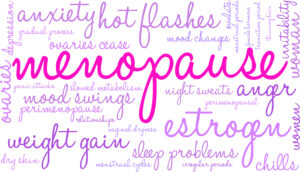
Chapter 1 of my book Encouragement for Writers in Perimenopause
[Also posted on my Substack page]
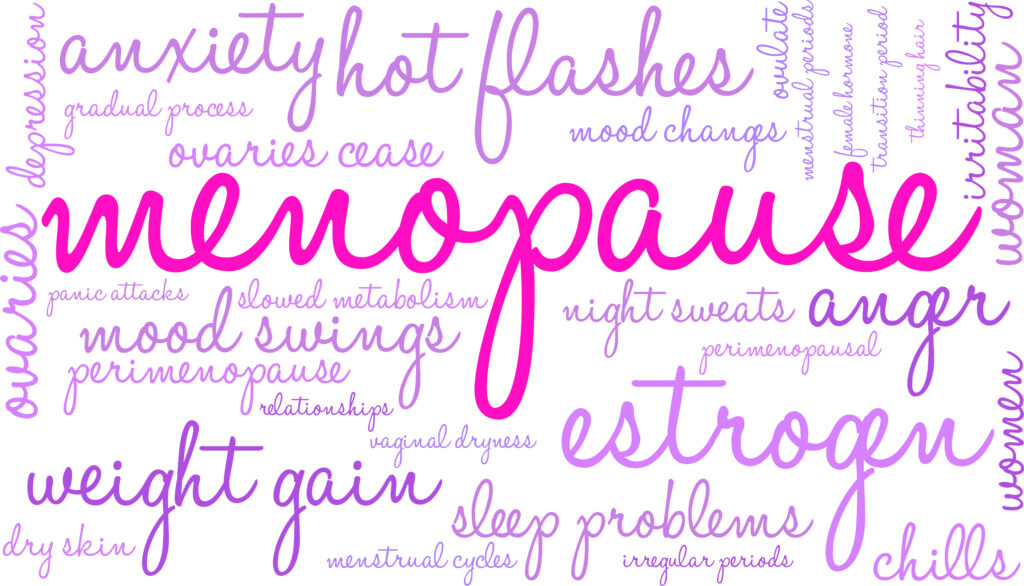
I have had the worst time with perimenopause and menopause, so bad I had to stop working last May. Things were finally evening out and I thought just maybe I was feeling myself…then the worldwide estrogen shortage began. Cue tears and anxiety and panic.
But there was a silver lining. I’d been making notes to write a book on surviving perimenopause for writers, hoping to help others with new resources that weren’t available to me. Since I’d been feeling so good, I was worried that I couldn’t remember how bad it had been and how to write about my experiences in a way that others would feel seen and heard. But when I was unable to get my estrogen prescription this summer, my symptoms returned and I felt seriously crappy again. Well, at least I could write about it in truth now!
Here is the first draft of the Introduction and Chapter 1. (Note that the web page I mention does not exist yet.) I’d love for you to share this article and leave a comment if you found it helpful. If there are things you’d like to see in the book, please let me know!
Introduction
I started writing this book several times from several angles over the last few years, and I couldn’t get the beginning right. I finally gave up trying to keep it light and encouraging because my experience with perimenopause and menopause has been anything but. I do want you to find encouragement and hope here, that’s the only reason to write this book. But I’ve decided if I don’t start by telling my story, you won’t know if this is the right book for you.
Read the next few pages and see if you relate. If so, keep on reading. My goal is to make you feel not-alone and to share with you the many resources I’ve found. If my story doesn’t resonate with you, no problem. There are more and more books coming out about menopause and how to deal with it (Thank God!) and you’ll find the ones that are right for you. I will post the resources I’ve found helpful on my website at kittybucholtz.com/menopause for anyone to use and share.
Warning: Going through menopause made me feel like I had developed Tourette Syndrome! Sometimes I will share how I felt in the words that I was feeling at the time. It is not the language that “nice girls” use. Thankfully, my mom isn’t alive to be shocked or to wash my mouth out with soap, so I’m going to tell you like it is. Here we go!
Chapter 1 – My Story
As with so many women, I don’t know when my perimenopause journey began. My friend E was a little ahead of me on the timeline, and she thinks I had already started by the time John and I moved to Sweden in 2018 (age 50). Part of the reason I can’t be sure is that I was deep into burnout by the time we arrived. I could barely get off the couch in those first months here, couldn’t focus on a TV show or read a book (my most favorite thing in the world to do!). Trying to do anything took all my energy for the day.
My friend C, however, thinks that the last time I was really myself was before March 2014. John was riding his motorcycle to work and was hit by a truck. He didn’t die. His head was safe (thank God for motorcycle helmets!) and his brain was where it should be. Not the case with one of his legs. In another world, where I lived a life that felt safe, I think I would’ve handled the whole thing a lot better. But living in Southern California where motorcyclists are hit every day, and many people die…all I could think was how grateful I was that John didn’t die and that God gave us the rest of our lives as a gift.
Melodramatic much? I know, you might be thinking that. But sitting on my couch writing this in 2026, I can’t remember the last time I felt safe. And that, I have found, influences everything.
Part of the reason I’m going to share so much here is that I am learning about all the things that influence the physical and mental health involved in the menopause transition. If I’d known that stress makes it all worse, I would’ve tried much harder to calm down.
Instead, I was scared. I knew I was in a terrible state of burnout, working too hard for too long and not getting the expected results, but I didn’t know what to do about it. Burnout seemed to be on the list of Secret Shames That Must Not Be Discussed. Even with all the oversharing on the Internet, Google couldn’t find me any articles that actually helped. And even though Sweden does have a system in place to help people recover from burnout, as a new immigrant I wasn’t in the system in a way that I could find and use the resources. I was just lost.
And when you’re scared about one thing, the next thing seems scary even if it might not have seemed so on its own. Add another thing and another…and I was falling through a downward spiral with no handholds and no one throwing me a rope.
Among the growing list of fears was bipolar disorder, which seemed to run in my family. What else could account for being happy one day and crying the next? Yes, now I know! Hormones! But no one in my family had ever talked to me about menopause, and my furtive attempts to find out how it affected women in my family yielded nothing. In my experience as an American, anything related to a woman’s reproductive health or mental health was known to be on the list of Secret Shames That Must Not Be Discussed so I didn’t know how to find information if even Google couldn’t find it.
As it turns out, there wasn’t much information available about perimenopause when I was going through it. Bipolar Disorder, yes, so I worried that I’d somehow developed that. There was information on Alzheimer’s Disease, so I worried that maybe I was experiencing early-onset Alzheimer’s. (I was in my 50s, after all.) I had a business coach who was sure I’d worked myself back into burnout in 2020, and I think she was right. So anything that may have started as perimenopause was masked by burnout symptoms as well.
I thought about going to a doctor and while I was figuring out how to do that in Sweden, COVID hit. It seemed insensitive and egocentric to ask for help for a problem in my head when others were so physically sick. So it was February 2023 by the time I saw a general practitioner. I was so messed up in my head and body by then, bringing her a long list of problems and symptoms and complaints and crying in her office, she offered me antidepressants and a referral to a psychologist. Apparently, this is not an abnormal treatment suggestion. I have to admit, I was shocked and appalled and emphatically insisted that there was something wrong with my body, that’s what I needed help with.
Thankfully, she also offered me HRT, hormone replacement therapy. Even though I didn’t know much about menopause, I’d been able to learn a little more since 2018, including what HRT was, the health studies over the years, the misunderstandings, and what was available then in 2023. I eagerly said yes to the HRT and no to the antidepressants and psychologist. After the first week, I already felt significantly better! A few months in and I thought, I can do this, I can get through perimenopause and menopause, no problem!
Then the HRT I was on became unavailable. I needed a doctor’s prescription to get something else, but the woman I’d seen had moved. Another doctor gave me a prescription for a different HRT. It did not work as well. (I don’t have a font called “dripping sarcasm” but I’ll tell you whenever I would use that font…like here.)
Over the course of three years, I saw multiple doctors and tried many types of HRT — patches, pills, gels. All I could think was — this is what happened when I tried to use birth control. Back in my 20s, I tried so many brands and kinds of birth control. So many. With one, I had a yeast infection every month. With another, I was angry all the time. Another made me cry two weeks out of every four. If it wasn’t one thing, it was another. As much as John and I felt strongly about not having kids, we were even more vehement about not taking drugs that were changing me so that we were both unhappy. Not good for our marriage. So eventually we fell back on condoms, diaphragm and spermicide, and praying that God agreed with our plan to remain childless. Happily for us, that worked. I felt so much better when I stopped taking birth control pills.
Now, I seemed to be back in that same loop, adding hormones into my body that messed with my mind. I wanted them to mess with my mind but in a good way. And it wasn’t happening.
I’ve always been the girl who loves school, and the woman who is always taking classes, and I was old enough (mid-50s) to have the conviction that I was in charge of my health. I had to learn more. I had to find doctors who knew more. And that’s how I learned how many doctors don’t know any more than I do! Gasp! A friend from church knew of my problems and offered to take me on as a patient and try to help me. Her office was an expensive train trip away, but my desperation and her good heart made it an easy yes.
Thankfully, she wasn’t annoyed when I sent her articles with new information and asked her if she would change my prescription to this or consider giving me that. We both learned a lot over our year together and we finally found an HRT combination that made me feel — well, pretty close to me. I wanted to feel overjoyed but I’d been here before. Give it another month or two, I told myself, then celebrate. Don’t get your hopes up, it makes the disappointment so much worse.
Good thing I listened to myself. Just two weeks after I wanted to celebrate that the old me was back in town (June 2026), I went to buy more estrogen gel and learned devastating news. We had entered a worldwide estrogen shortage!
Cue shock, tears, fear, and desperation.
I hurriedly bought more of the pill that made me cranky and tearful (but otherwise kept me from feeling even worse). A friend generously gave me a months’ worth of her patches but her prescription had a very low dose of estrogen, much less than what I’d been taking, and I quickly spiraled back into anxiety, depression, and brain fog. When I could finally get the gel again, I added half as much as I used to take to the patches. I was trying to get close to the same total amount of estrogen that had been working before while also trying not to run out of what I’d been able to purchase. Anxiety was running my life again, making my decisions without knowing if they were good or bad.
(I’m going to remind you every now and then that I am not a doctor and you shouldn’t do as I do. I’m a woman telling you about my experience and helping you think of questions you can ask your own doctor about your unique and individual health issues.)
Around this time, my doctor friend told me that they were getting more training in menopause at her office and far more menopause-related patient visits. But she felt she had helped me as much as she could and was referring me to a gynecologist. I was elated about the gynecologist, especially after going to her website and finding out she actually knows stuff about menopause! Unfortunately, the supply and demand curve meant I had to wait three and a half months for my appointment. In the meantime, I continued to read new books coming out with new research and followed these doctors on their podcasts and YouTube channels.
At the time I’m writing this chapter, I’m still six weeks away from that appointment, still struggling with tearfulness, occasional bouts of swearing and anger, forgetfulness and occasional brain fog, fighting social anxiety (no one who knows me believes I could possibly have social anxiety, that’s how much I’ve changed), and a range of physical symptoms. And all of that is still far better than where I was four years ago before I saw my first doctor.
I have spoken to a lot of women about perimenopause (where the worst of the symptoms seem to be) and menopause (research indicates that it can take two to five years after your last period — menopause — to be rid of the symptoms). Their experiences are all over the map. Few of them have experienced the range and depth of symptoms that I have. I have felt so alone during this process. The anxiety and depression at some points pinned me to the ground.
Depending on what people think about health, about sharing, about their spiritual beliefs in response to crisis, and how they shared those thoughts with me, I sometimes felt so alone and burdened, I was sometimes disappointed to wake up in the morning. Not suicidal, just wishing it was over and I was healed and in heaven and happy again. But it is, in fact, the people who unknowingly made me feel the worst who made me want to write a book and share with the people who feel more like me. You are not alone.
You may feel alone, but you are not alone.
I have hope and I want to share it with you! There are so many more doctors and researchers studying menopause and the huge variety of symptoms. There are so many more women my age speaking up, sharing information, funding research and clinics, and normalizing menopause in daily living.
This is what will make the difference — in our lives and, perhaps more importantly, in the lives of our daughters and nieces and friends. Menopause is a normal part of life, experienced personally by half the world, and secondarily by the other half. I’m not convinced anything should be on the list of Secret Shames That Must Not Be Discussed. But menopause definitely shouldn’t be. If I share my story, and you share your story, and if our husbands share their stories of how they got through it and how they helped and hindered us getting through it, all these shared experiences will help our families and friends and neighbors.
And by the time our grandchildren are our age, they won’t understand at all what all the fuss was about. Wouldn’t that be great?
That’s my hope.